

Business & Technology Strategy
Aligning business goals, technology, and execution to move your organization forward. [ LET'S TALK ]
Strategy Should Lead to Action
Many organizations have business and technology plans—but struggle to connect strategy to execution.
You may be dealing with:
Legacy systems and processes
Disconnected business and technology priorities
Growth or transformation initiatives without a clear roadmap
Technology investments that aren't delivering expected value
Uncertainty about what to prioritize next
The goal isn't simply to create a strategy. It's to create a clear path from today's challenges to tomorrow's results.
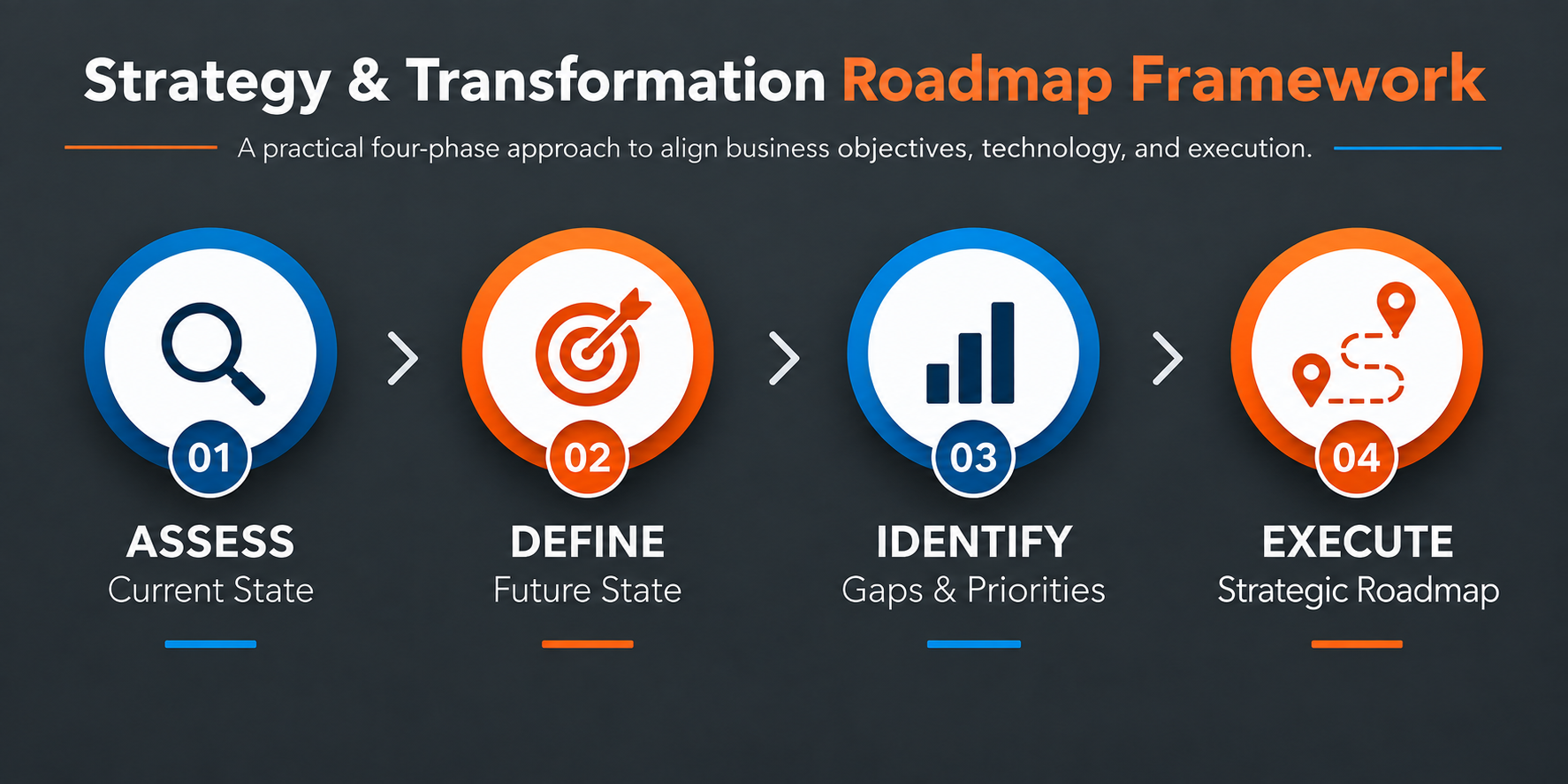
We Use a 4-Phase Strategy Methodology
01 — ASSESS Current State: Understand where the organization is today.
Assess business objectives and performance
Evaluate processes, capabilities, and operating models
Review technology, applications, data, and infrastructure
Identify current challenges, constraints, and opportunities
Key question: Where are we today?
02 — DEFINE Future State: Establish where the organization wants to go.
Define strategic business objectives
Establish the desired operating model and capabilities
Define the future technology environment
Align business and technology priorities with organizational goals
Key question: Where do we want to be?
03 — IDENTIFY Gaps & Priorities: Determine what needs to change to reach the future state.
Compare current and future states
Identify gaps across people, processes, technology, data, and capabilities
Determine root causes and dependencies
Prioritize the most important opportunities and challenges
Key question: What needs to change?
04 — EXECUTE Strategic Roadmap: Turn the strategy into an actionable path forward.
Define strategic initiatives and investments
Prioritize initiatives based on value, feasibility, cost, and urgency
Establish sequencing, milestones, and dependencies
Develop an actionable roadmap for execution
Key question: How do we get there?
Strategy & Business Transformation Methodology
How We Help
Strategy That Connects Business & Technology
Depending on your needs, strategy engagements can address:
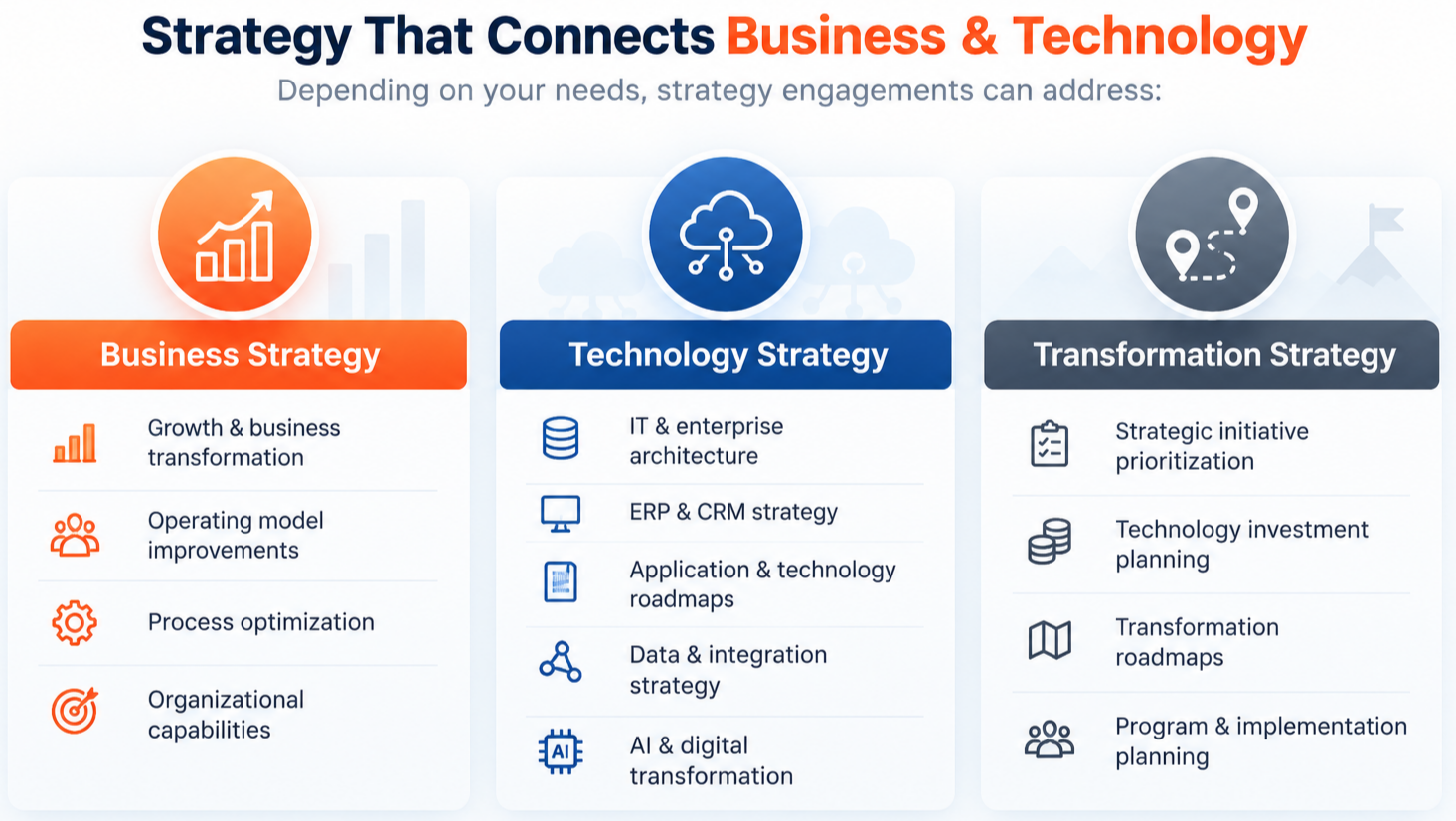
Business Strategy
Growth & business transformation
Operating model improvements
Process optimization
Organizational capabilities
Technology Strategy
IT & enterprise architecture
ERP & CRM strategy
Application & technology roadmaps
Data & integration strategy
AI & digital transformation
Transformation Strategy
Strategic initiative prioritization
Technology investment planning
Transformation roadmaps
Program & implementation planning
Deliverables & Outcomes
From Strategy to Roadmap
A strategy engagement can provide the clarity & direction needed to make informed investment & execution decisions.
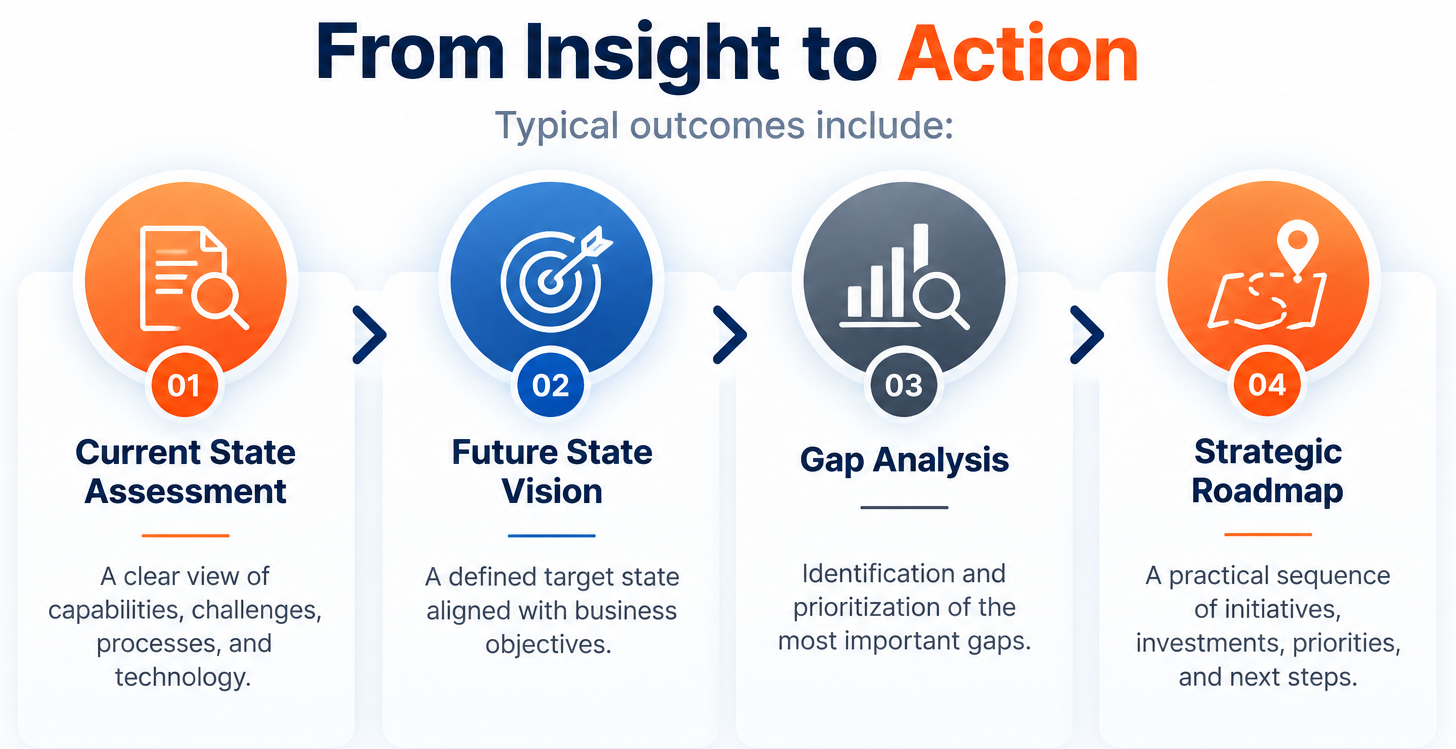
Typical outcomes include:
Current State Assessment
A clear view of capabilities, challenges, processes, and technology.
Future State Vision
A defined target state aligned with business objectives.
Gap Analysis
Identification and prioritization of the most important gaps.
Strategic Roadmap
A practical sequence of initiatives, investments, priorities, and next steps.
Ready to Turn Strategy into Action?
Whether you're planning growth, replacing legacy technology, preparing for transformation, or simply trying to determine what comes next, I can help develop a practical strategy and roadmap.